

Speakers & Presenters
Further information about the amazing speakers we have lined up

Mx A.J O'dea -
Biography
AJ O’Dea is a museum host and tour guide at Museum of New Zealand Te Papa Tongarewa, where they share stories about Aotearoa’s cultural and natural history with visitors from around the world. They are also an artist and an intersex advocate involved with Intersex Peer Support Australia and Intersex Aotearoa, working to increase understanding and visibility for intersex communities in Aotearoa.
AJ has a passion for storytelling and education and in their free time, they enjoy running Dungeons & Dragons, language learning, playing video games or exploring the outdoors.
Our MC for the entiriety of the wānanga- see biography for more info on AJ

Tu Chapman
Biography
Tu is an experienced Māori leader (Ngāti Kahungunu, Ngāti Awa, Ngāti Tūwharetoa, Taranaki whānui) specialising in strategic commissioning, data-driven insights, and kaupapa-led system transformation. She leads across outcomes, data governance, communications, and sector engagement at a regional and national level.
Her leadership is shaped by extensive lived experience - as an intersex Māori woman, a survivor of state care, and someone who has navigated multiple government systems throughout her life. This grounding brings a sharp, informed lens to inequity, resilience, and the structural change required to serve whānau with dignity.
Tu is known for her clarity, courage, and authenticity. She brings a survivor-centred, tikanga-grounded approach to every space she occupies.
Tu hasn't provided us an abstract- but we know she'll be amazing

Prof. Katrina Roen
Biography
Katrina Roen is a Professor of Sociology at the University of Waikato in Aotearoa New Zealand. Katrina's research addresses questions about intersex well-being, healthcare and human rights.
Session Title: Protecting Children’s Bodily Integrity and Human Rights
NB: Prof Roen is delivering joint research project- other author Dr. Claire Breen
This is a presentation of research that is currently in progress. Our research team is engaging public sector decision-makers in conversations and workshops to build understanding about intersex human rights and identify opportunities for change. We are examining the issue of medical intervention on intersex children from the points of view of (i) human rights law and (ii) concepts of bodily autonomy and integrity. This project seeks to explain and address the current inertia in Aotearoa New Zealand in relation to our continued failure to protect the human rights of intersex people.

Dr. Rogena Sterling (PhD, LLM, LLB) Chair- Intersex Aotearoa
Biography
(Skart/Intersex, of Scottish descent, living on the lands of Waikato-Tainui)
Dr. Sterling is currently a lecturer and researcher at the University of Waikato. Their focus is on human rights; identity/well-being; privacy and data sovereignty; customary law; (inter)sex/gender issues. Their thesis and research centres around human rights and interests. Their work has involved rights and interests and engagement, for example, they have worked on outlining the rights and interests in data; CARE principles (for Indigenous peoples) in the open data space; developing a framework for Māori data privacy along with kaumatua; developing frameworks for eDNA Māori engagement processes; and intersex issues in health and education. These have been presented at numerous conferences and talks and widely published. They are on a number of advisory committees and have had a Ministerial appointment to the Winston Churchill Memorial Trust Board.
Session Title: Embodiment as Central to Health of Intersex People
Background: Intersex people experience systemic trauma and violence through foundational structures, especially medical, that should support them. This is not only physical trauma through non-consensual medical interventions, but the erasure of their personhood.
Western medical frameworks have classified the innate bodily diversity as a "Disorder of Sex Development" (DSD) and later ‘variations of sex characteristics (VSC). These function to remove the link between intersex people and ancestral lines (whakapapa), they remove the inherent spiritual authority (mana) and pathologise the body. This separation of the physical body from a psychological ‘identity’, is inadequately addressed by current feminist or queer theories that retain this fundamental body-self split
Methods: This study employs a critical theoretical analysis, drawing from te ao Māori (the Māori worldview) to propose a paradigm shift in understanding intersex sexual health. We centre the Māori concept of whakatinanatanga—the sacred act of embodiment—as the primary analytical framework. This approach is integrated with a whole-of-life perspective, examining how the consequences of pathologisation accumulate across the life course. The analysis is further supported by feminist materialist scholarship and a review of life course research on the health outcomes of intersex adults.
Results: The analysis reveals that the Western concept of "gender" was invented as a clinical tool to manage and erase intersex bodies, making it a structurally violent and disembodying apparatus. Applying the Te Whare Tapa Whā (four pillars of Māori health) model demonstrates that pathologizing the intersex tinana (body) causes a total collapse of well-being across physical, spiritual, mental, and social domains. Furthermore, the whole-of-life perspective shows that these harms—including loss of sexual sensation, spiritual alienation, and significant mental health disparities—are not confined to infancy but accumulate and evolve from youth through old age, with healthcare systems typically failing to provide dedicated care pathways for intersex adults.
Conclusion: Sexual health for intersex people is unattainable through models that pathologise their existence. Whakatinanatanga offers a necessary and liberatory framework by reclaiming the intersex body as the sacred and undeniable evidence of a valid whakapapa. This requires an immediate end to all non-consensual interventions, not only to prevent physical harm but to protect the integrity and restore the mana of a people. True sexual health and well-being demand a whole-of-life, intersex-led, and culturally responsive care model grounded in the profound affirmation of embodied personhood
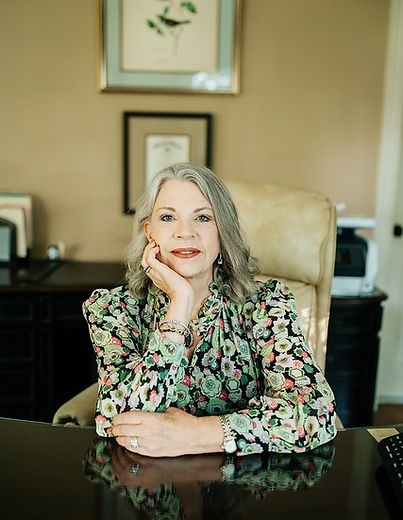
Dr. Cynthia Mulit. Ph.D, LPC, NCC, BC-TMH
Counselor Educator
Biography
Dr. Cynthia Mulit, Ph.D., LPC, NCC, BC-TMH is a licensed professional counselor with a doctorate in counselor education. Her career mission is to increase the quantity of mental health professionals properly trained to support intersex individuals. In her groundbreaking dissertation, Intersex Experiences, Activists’ Perspectives, and Counseling Implications, Dr. Mulit developed the first therapeutic intersex identity model based upon interviews with empowered U.S. intersex activists. Cynthia authored the intersex overview article, Intersex Individuals, in the Sage Encyclopedia of Multicultural and Social Justice Counseling. Dr. Mulit maintains a private practice, Beyond the Binary – Counseling and Consulting Services, LLC. In Cynthia’s first career in nonprofit administration, she garnered multimillion dollar federal and state awards for the model training programs she designed to provide job skill training for at risk youth. Cynthia received her B.A. in philosophy from Stanford University, her M.A. in clinical mental health from Fairleigh Dickinson University, and her doctorate from University of Missouri.
Session Title: How Do You Explain What It Means to Be Intersex? A Teaching Tool.
Intersex communities possess beautiful diversity.
Yet that complexity produces a challenge for educators and activists.
How can we rapidly convey a coherent intersex specific story?
How do we honor sub-community disagreements and the overlapping issues with other LGBTQ+ movements without being buried in them?
As a counselor educator, the presenter first turned to models.
In her dissertation, she developed an intersex specific identity development model to organize psychological themes culled from interviews of U.S. intersex elders. She now addresses the larger social contexts in which intersex individuals develop their personal identities.
This session presents a teaching tool in progress, a series of diagrams titled Intersex People: Exist and Are Human Beings, including sub-categories, Intersex-Biology, Intersex-Communities, Intersex-Identity Development, Intersex-Culture, Spirituality, and History, Intersex-Human Rights, and Intersex-Leaders and Contributions. The teaching tool is designed to (a) depict that intersex individuals are not erased by Western politics and medicalization, and (b) highlight the unique intersex identity challenge. Intersex people are told by a binary sex philosophy that they do not exist when they most certainly do.

Gustavo Serafini- (International Speaker)
Biography
Gustavo believes in building a culture that empowers more human potential.
Gustavo was born both intersex and with physical disabilities, which taught him the power of adaptation, resilience, and seeing people for who they are.
He co-founded Pure Audio Video 20 years ago, where he works
in the home technology space and is currently advocating for Universal Design and Accessible Design in homes.
Gustavo co-created the Enabled Disabled podcast, which
amplifies the work of people with disabilities and their allies. The podcast grew into a community of change-makers who recognize that vulnerability is the foundation for strength, and that disability brings new skills and adaptations to humanity.
He is currently working on the intersection between disability and intersex with the goal of eliminating the medical pathology in both communities.
Gustavo has a Bachelor's and Master's degree from The University
of Chicago, and a Law Degree from George Washington University.
Gustavo hasn't provided us an abstract- but we know he'll be amazing

Te Ngākau Kahukura Team Co-Leads; Moira Clunie (they/them), Joey Macdonald (they/them) and Jelly O’Shea (they/she) and Jono Selu (they/them
Biography
Te Ngākau Kahukura works nationally towards an Aotearoa where rainbow people grow up feeling safe, valued, and like they belong in the places where they live, learn, and access healthcare and social support. Our work prioritises people with an IVSC, recognising many may not identify as part of rainbow communities. We collaborate with professionals, organisations and wider systems in fi ve key ways: educating decision makers, embedding rainbow competence in professional training, building inclusion in services, developing accessible information and growing rainbow support sector infrastructure.
Jelly O’Shea is an intersex advocate and has a background in intersex and rainbow community-led advocacy, IVSC/intersex peer-led work, Tauiwi and Pākehā anti-racism movements, and creative community development.
Moira Clunie MNZM (Te Rarawa) (MSCL) has led government engagement, evidence-based programme design and systems change across rainbow, mental health and disability sectors.
Jono Selu (MASW, RSW) has worked in youth and community development, health promotion, violence prevention, decolonial practice, and has networks across Pasifi ka and rainbow spaces.
Joey Macdonald (MA) has deep experience in rainbow education, training and advocacy, including in mental health and gender-affi rming care.
Session Title & Description
Collage of Playful Resistance: On Intersex Joy, Worldmaking & Reimagined Pasts & Futures with Te Ngākau Kahukura
This creative workshop invites attendees to explore the narratives surrounding intersex embodiment through the act of collective collage-making and playful visual storytelling. Come along & cut, paste & assemble new possibilities for bodies and expressions. This could be as goddess, atua, nature's emergent eruptions, abstract beings, or something entirely new and your own.
Using text and visual prompts from historical & cultural imagery, participants will be encouraged to create bold, exaggerated, or tender
interpretations of bodily diversity. This is about joyful disruption, artistic exploration, and making room for intersex experiences that are misunderstood or under celebrated.
Come as you are—no art skills required. Just bring your curiosity, your humour, and your willingness to learn/unlearn through laughter and creative play.
At the end of the session leave your creations and contact details with us, and we will turn your artistic piece into a collaborative Zine, which we will post to you after the conference.

Prudence Walker- Kaihautū Tika Hauātanga Disability Rights Commissioner
Biography
As the Disability Rights Commissioner and rainbow/ health/ housing rights spokesperson for Te Kāhui Tika Tangata | New Zealand Human Rights Commission, Prudence is deeply committed to advancing equity for all people.
With over 20 years working in and around human rights, their work is driven by a strong belief in social justice.
Prudence grew up in Wairarapa, Taranaki, North Otago, and now resides in Ōtautahi | Christchurch.
Bringing a lived experience as a disabled and queer person, Prudence’s approach is fundamentally intersectional.
With 25 years of advisory and governance experience, Prudence is a strategic thinker, and their work has always involved a strong people focus.
Prudence is an experienced facilitator having often guided learning and discussion on complex issues with diverse audiences.
Qualifications in Hospitality Management, Human Resource Management, Te Reo Māori, along with a commitment to continued learning have enriched Prudence’s understanding of people and the world.
Prudence has previously held roles including Chief Executive of a Disabled Persons Organisation (DPO), a number of training, rights, values and leadership-based roles with a disability service provider, and governance roles supporting the health and psychosocial needs of young people living with cancer in the early 2000’s
Session: The Disability Commission for Intersex Persons
Disability is common within intersex, ira tangata, and IVSC communities. This may be related to natural variation, but is often the result of forced or non‑consensual medicalisation. Despite—or sometimes because of—these experiences, many people are reluctant or fearful about accessing disability support or learning what services are available to them.
In this session, Kaihautū Tika Hauātanga Disability Rights Commissioner Prudence Walker will introduce the Commission’s role, explain what support is available, and discuss how these services can better support people with variations. This kōrero aims to increase understanding, reduce barriers to access, and build clearer pathways to support within these communities.
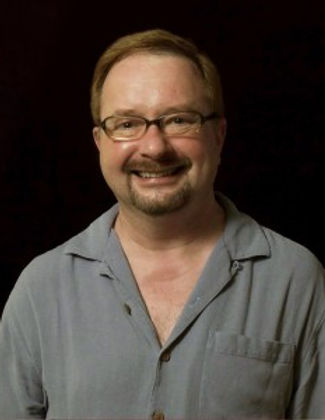
Jim Costich
Biography
Born Rochester, NY 1957 Strong Memorial Hospital, first of 3 brothers. My sex was and is neither male nor female. I have neither fertility. I have some male-ish and female-ish organs, with the benefit of adult hormone therapy I have healthy secondary male sex characteristics. I share most of the experiences of males and very few of the experiences of females. However, I do not have all the experiences of either. Just like all life on planet Earth I am “All-And” instead of “Either-Or”.
I’m a gay (orientation), intersex (my sex), man (gender). I am infertile but I’ve been a father because I adopted. I came out of the gay closet around 1975. I had heard the words, “intersex”, “hermaphrodite”, and “male pseudo-hermaphrodite” by about 1972. I’ve been a public advocate and educator about Intersex since the late 80’s. I do public speaking, write prolifically, see my free substack page http:jamescostich.stubstack.com and appear in the documentary, “Intersexion” available on Amazon. I am available by zoom or google. My career is retired medical laboratory tech. and my hobbies and reading include sciences all sorts, science fiction which I also write, ceramic glazing and everything you can see through a microscope or telescope. I am widowed but hoping that may change.
Jim hasn't provided us an abstract- but we know he'll be amazing

Taine Polkinghorne- Human Rights Commission
Biography
Taine Polkinghorne (he/him) is Te Kāhui Tika Tangata Human Rights Commission’s senior advisor on sexual orientation, gender identity and expression, and sex characteristics (SOGIESC).
As an endosex ally, he has walked alongside and worked with many intersex people in Aotearoa to advance their rights domestically and internationally. This has included ensuring intersex voices are present in decisions that affect their lives, raising awareness of a broad range of their human rights issues, advocating for improved healthcare services, promoting inclusion in population-level data collection, holding decision-makers accountable, and succeeding in achieving the first mention of intersex/VSC in New Zealand legislation.
Outside of work, Taine enjoys giving back through volunteering, and loves cats, books, and tea (preferably all at the same time). He is Tangata Tiriti and lives in Tāmaki Makaurau.
Session Description
Taine's presentation outlines the role of Te Kāhui Tika Tangata Human Rights Commission in promoting, protecting, and monitoring intersex human rights across legislative, policy, and social domains. He will highlight how intersex, ira tangata, and people with innate variations of sex characteristics (IVSC) can drive systemic change through strategic submissions- not only to United Nations mechanisms internationally, but also to domestic law reform processes, public consultations, and sector guidelines. The session will demonstrate how lived experience strengthens advocacy impact, influences decision-makers, and builds accountability. Key resources will be referenced to support sustained, community-led human rights advancement.

Mathilde Redamare -Intersex Aotearoa Team Lead & Peer Support Lead
Biography
(they/them, English/Scottish)
Kia ora! Ko Mathilde ahau. I’m an intersex person based in Tāmaki Makaurau | Auckland, and proud to serve as the Operations Lead and Peer Support Lead at Intersex Aotearoa.
With lived experience of navigating the complexities of intersex identity, I bring both personal and professional experience to my dual role.
In Operations, I work to ensure our organization runs smoothly and sustainably, helping to coordinate structures, resources, and day-to-day processes so that our advocacy, education, and community-building work can thrive.
As Peer Support Lead, I draw on my own journey - growing up, I often had to advocate for myself, and I know how hard that can be. My goal now is to offer others what I needed: an affirming and understanding space. Intersex Aotearoa believes that everyone deserves to be seen, heard, and supported.
I’m deeply informed and motivated by the vision of making Aotearoa a place where intersex people are affirmed, respected, and empowered to thrive.
Mathilde will be working to support attendees throughout the wānanga

Saunoamaali’i Karanina Sumeo
Biography
Saunoamaalii Karanina Sumeo is Samoan and a mother of three. Her professional background is in human rights, social work, and community development related to women and Pacific peoples.
Karanina's professional and academic background involved advocacy for the interests of our Rainbow aiga/whanau. Her PhD was on land rights and empowerment for women, fakaleiti, and faafafine in urban settings in Tonga and Samoa.
Saunoamaalii was previously the Equal Employment Opportunities Commission at Te Kahui Tika Tangata - Human Rights Commission (Nov 2018 - Nov 2024), where she continued to support work to advance the rights of Rainbow whanau.
Karanina hasn't provided us an abstract- but we know she'll be amazing